

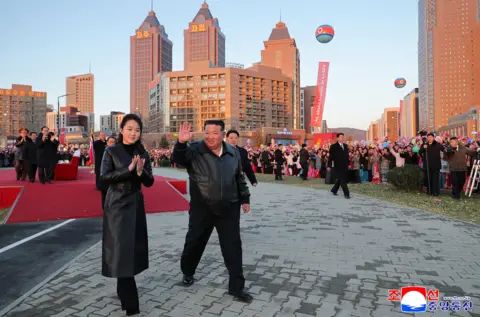
While threats directed at South Korea and declarations to grow the nuclear weapons program, a key query lingered at the latest political assembly: would the leader's young daughter be designated as the heir?
While conclusive confirmation failed to emerge during the congress, it has fueled a significant discussion about the young girl's potential as the prospective ruler of the populous nation, a dictatorship solely led by the Kim family dynasty.
Growing Visibility and Speculation
The girl has become progressively present in official broadcasts next to her parent. However, a great deal about her continues to be shrouded in mystery. Pyongyang has consistently refused to formally published her identity or verified her age.
Her existence was initially publicised abroad in 2013. Over the years, she is generally believed to be 13 years old, in part on analyst assessments.
Signs of Future Leadership
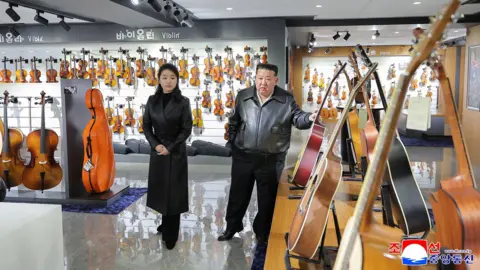
Observers highlight several notable clues. Her regular public sightings—often centered in the camera view—and the use of reverential language typically used for the leader are seen as strong indicators.
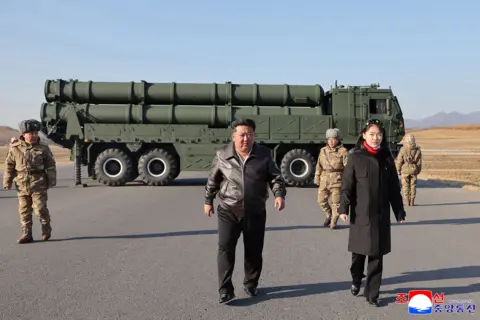
Additionally, her proximity with the army is deemed an additional important piece. She has inspected soldiers and missiles together with her father. Often, high-ranking generals have been seen bending beside her to confer during armed forces parades.
"The state media is using words set aside for the supreme leader. It highlights her own iconic image," states one respected expert.
Such military indoctrination is considered essential, as real power in North Korea lies with control over the army. To be a legitimate future leader, she must be seen as a authoritative commander.
Controversy Over Sex and Tradition
However, a significant counter-argument persists. Some former officials contend that North Korea's profoundly patriarchal system presents an major barrier for a woman leader.
They point out that women at all level face difficulties for fair recognition. Women leaders in senior roles are extremely rare. Widespread superstitions also highlight these biases.
"If they do, they finish the journey then go to the back of their car and expectorate three times to remove the misfortune," explains a ex- regime official.
Shifting Societal Landscape
Alternatively, other researchers argue that the role of females in North Korea has changed notably since the 1990s.
Amid that period, as the state economy faltered, females often became the key breadwinners, turning to black market business. This has reportedly led to a slow change in gender dynamics.
A researcher who has interviewed many escapees argues that it is now less rare to see females in managerial positions within the regime.

"We cannot analyze North Korea with outside perspective. We must see them as the Joseon dynasty," comments the expert. "What person would dare oppose a person of Paektu blood who is assuming the leadership?"
Succession Calculations
Recent party appointments are also being scrutinized. The promotion of Kim Yo Jong, the leader's sister, to a senior propaganda post is seen by some as a measure to position a protector for the potential heir.
Finally, observers are split. Some view the attention on Ju Ae as a strategic move to improve the leader's reputation and prepare the ground for another family transfer of power. Others maintain the indicators of her preparation are far too substantial to ignore.
Either way, the discussion alone may achieve a function for the regime, keeping outside attention firmly fixed on the secretive Kim rule.


